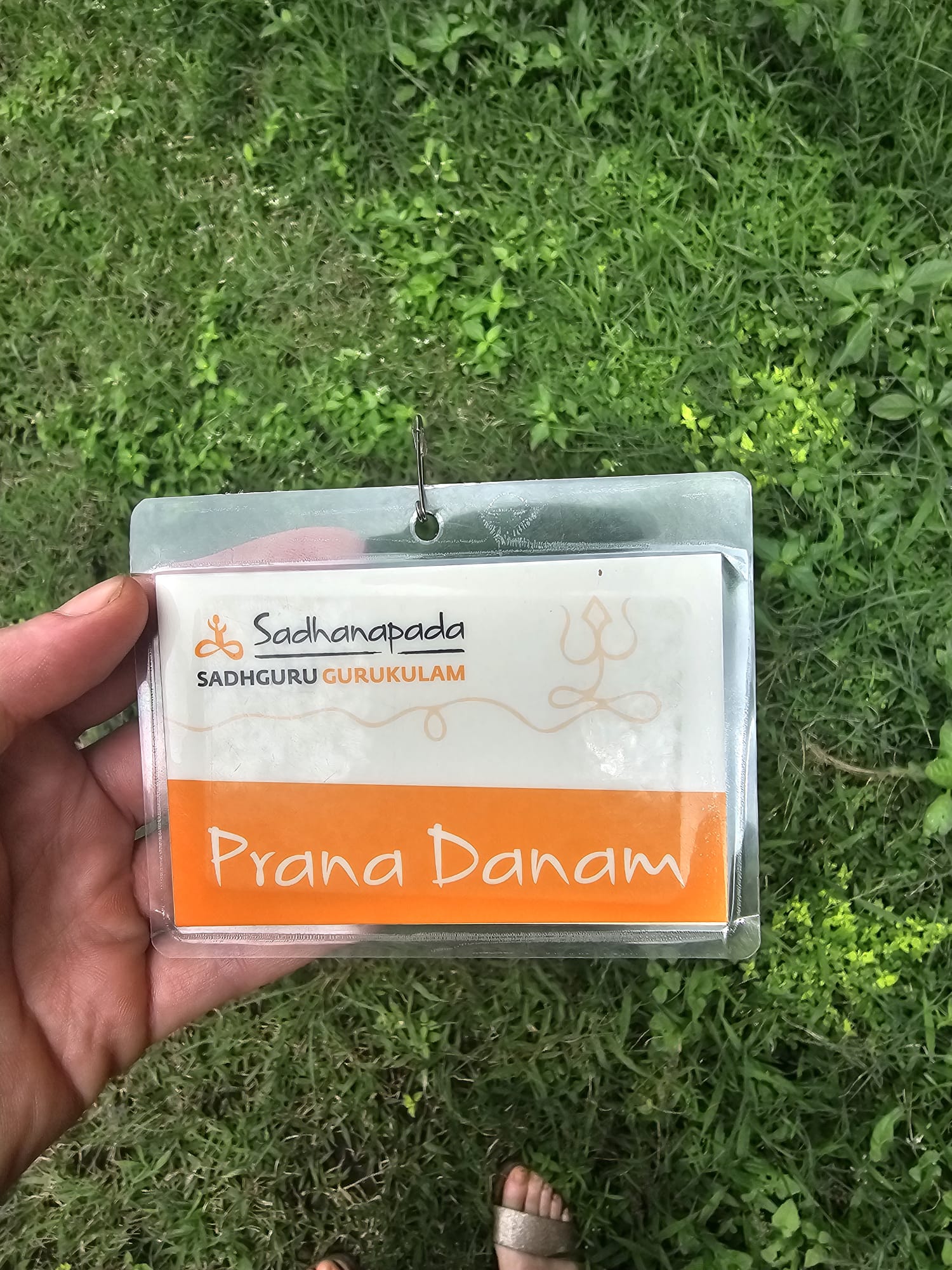

Prana Danam part 5 Finale
How it ended
Prana danam is now over. As significant as it had seemed , it ended very unceremoniously. A group viewing of an ashram exclusive but painfully long Sadguru video and a ball of laddu each is all we got to mark the occasion. Finally, we were off the hook, free to enjoy the rest of the day as we pleased – yes, sadhanapada “sadhakas” and regular volunteers only got ½ day off in return for their service , before resuming their normal duties or picking up new ones. Technically, I was a paying guest, a rando that kind of just showed up, so I get to be off the hook for good – the only one to have that privledge, at £7/night including meals. £7/night, one of the cheapest rooms in the paid-for accommodation of the ashram, and yet a small fortune for many here, afforded me a level of basic but real comfort and luxury that none of my seva-mates dared to dream of anymore.
Prana danam is now over. As much as we all got deeply intertwined into each other during the program, we all split up and drifted away in our respective directions We bid each other farewell and all the best for a happy successful life, only to meet up if fate brought us together again.
I did not return to Isha ashram, and do not intend to. 6 months after I left, I had done a lot more travelling, within and outside of India. I got exposed to other types of yoga, and more importantly, to different teachers and different schools of yoga – where I was taught names of asanas and practices, where they came from and what they did, and how to use them.
The kind of knowledge barred from us at Isha; in Sadghuru’s approach, we are shown practices – if and only if we are deemed worthy of it, i.e. by paying for expensive workshops. In any workshop students are shown one sequence only, usually a mix of asanas and pranayams, where they are instructed to follow steps to the letter and not ask any questions. No names are given to asanas, pranayams, bandhas or mantras. No explanations on what they do to the body or mind, when to practice them or avoid them; No anatomy knowledge or details on adjustments; No mentions of sacred texts or important textbooks to support our learning – for the aim is not to learn anything . The aim of yoga in the Isha system is to give absolute and totally blind faith to the process, and specifically and just do what we are told. Knowledge and information are seen as barriers to this.
Being inpertinent and insolent by default, that didn’t sit well with me. Faced with authority that takes no comments or questions, I rapidly start acting up – I am not a good fit for this type of spiritual practice.
In response to my critical views of Isha, people often ask – would I do prana danam again, knowing what I know now? Yes absolutely.